# Why Backdrop Stands Matter for Professional Event Branding
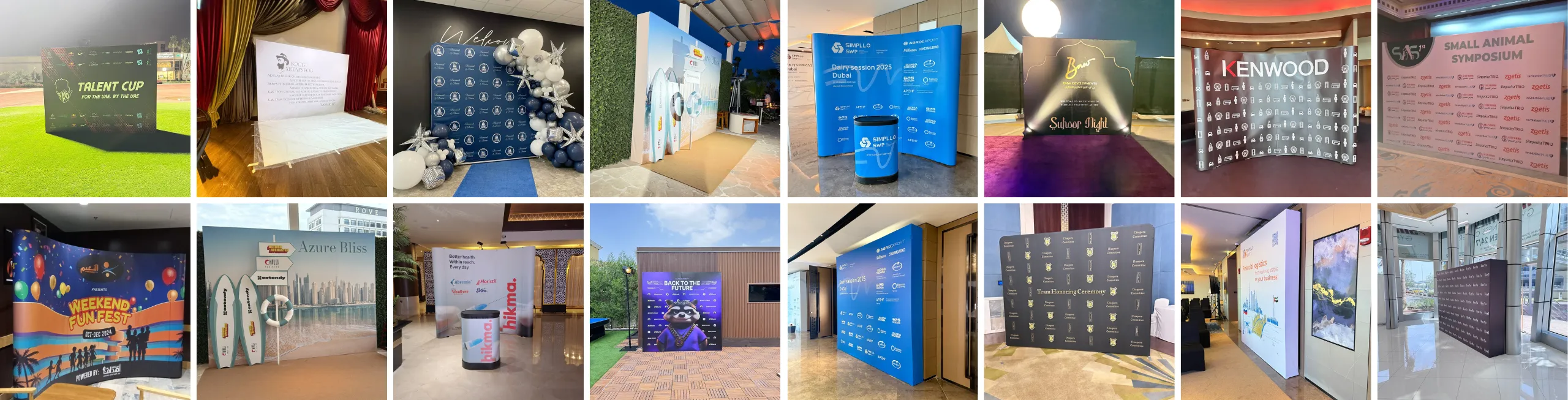
An event can have excellent speakers, attractive displays, and carefully planned activities, yet still feel visually disconnected if the branding is not carried consistently throughout the venue. Walls, entrances, presentation areas, registration points, and photo zones all contribute to how attendees experience an event.
Backdrop stands offer a practical way to bring these spaces together. They create a defined visual area for logos, campaign graphics, photographs, messages, and other brand elements without requiring permanent changes to the venue.
For exhibitions, conferences, product launches, corporate gatherings, and promotional events in Dubai, the right backdrop can serve both a branding and practical purpose.
## Why Event Backdrops Matter
An event backdrop is often one of the first visual elements people notice when entering a branded space. It can establish the identity of an event while providing a clear background for presentations, displays, or photographs.
Unlike a small tabletop sign, a backdrop has enough surface area to create a stronger visual presence. It can also help divide a large open venue into recognisable areas.
For example, an exhibition booth may use a backdrop to define its main presentation wall. A conference can place one behind a stage or speaker area, while a product launch may use it as a branded photography point.
The important consideration is not simply making the backdrop large. It should support the purpose of the space.
## Choose the Backdrop According to the Event
Different events have different requirements. A small business presentation may need a compact display that can be transported easily, while a large exhibition booth may require a much wider branded surface.
Before choosing a system, consider:
* Available floor and wall space
* Indoor or outdoor use
* Expected viewing distance
* Transport requirements
* Setup time
* Frequency of reuse
* Amount of artwork or information
* Whether photography will take place in front of it
Businesses can compare <a href="https://zamadina.com/backdrop-stand-dubai/"> backdrop stand display solutions for professional events</a> based on the venue and intended application rather than selecting a format simply because it looks attractive.
## Pop-Up Displays for Flexible Event Branding
Pop-up systems are useful when a display needs to be assembled and removed regularly. Their expandable frame structure allows the graphic surface to be set up without constructing a permanent wall.
They can be used at exhibitions, conferences, trade shows, product launches, and promotional events.
One advantage is flexibility. Different grid sizes and configurations can accommodate different booth dimensions and available floor areas. Straight displays create a flat presentation surface, while curved versions introduce a different visual shape.
For businesses attending several events throughout the year, portability and reusability can also become important factors.
## When a Roll-Up Display Makes More Sense
Not every event requires a large backdrop. Sometimes a business simply needs a compact display that can be positioned near an entrance, registration desk, presentation area, or exhibition stand.
A roll-up banner can be useful in these situations because the printed graphic retracts into its base for transport and storage. This makes the format particularly practical for businesses that frequently move between venues.
<a href="https://zamadina.com/backdrop-stand-dubai/roll-up-banner-printing/">Compact roll-up displays for exhibitions and presentations</a> can carry a logo, short message, product information, promotional graphics, or event details while occupying relatively little floor space.
The design should still remain readable. A narrow display filled with small text may be technically informative but difficult for visitors to understand from a distance.
## Use Printed Banners for Larger Areas
Some venues require more coverage than a portable stand can provide. Large halls, outdoor areas, stages, temporary partitions, and promotional zones may benefit from printed banner graphics.
<a href="https://zamadina.com/backdrop-stand-dubai/banner-printing/">Custom printed banners for large event spaces</a> can provide a wider visual surface where organisers need substantial branding coverage.
The material should be selected according to the environment. Indoor and outdoor applications can have different requirements, particularly when factors such as wind, sunlight, moisture, mounting, and expected usage duration are involved.
A large banner should also be designed with viewing distance in mind. Text that appears readable on a computer monitor may become too small once the banner is viewed from across a venue.
## Add Visual Movement With a Curved Backdrop
Straight backdrops provide a clean, conventional presentation surface. Curved displays offer another visual option.
The curved shape can create a softer appearance and may help frame a presentation or photography area. It can also give an exhibition booth a more distinctive physical structure without requiring a complicated custom-built wall.
<a href="https://zamadina.com/backdrop-stand-dubai/curved-pop-up-banner/">Curved Pop Up displays </a> for a more dynamic event backdrop can therefore be considered when the design calls for something different from a standard flat background.
The artwork should account for the curve. Logos, text, and important graphics need to be positioned carefully so they remain visually balanced rather than appearing distorted or pushed toward the edges.
## Fabric Backdrops for Seamless Presentation
Fabric systems offer another approach to event branding. Instead of using separate rigid graphic panels, fabric can create a continuous printed surface across the frame.
This can be particularly useful for photography areas, conferences, exhibitions, and corporate events where a clean background is important.
Seamless <a href="https://zamadina.com/backdrop-stand-dubai/fabric-pop-up-banner/"> fabric backdrops for indoor events</a> can provide a continuous visual surface with fewer visible breaks than panel-based systems. Current fabric pop-up formats can use lightweight aluminium frames with printed fabric attached to the structure, making them suitable for repeated indoor event use.
The choice between fabric and rigid graphics depends on the desired appearance, transport needs, event frequency, and available setup space.
## Design the Backdrop for Photography
Event branding and photography often overlap. Attendees, speakers, exhibitors, and guests may take photographs in front of the branded area and share them online.
This makes the backdrop's composition particularly important.
A useful photo backdrop should avoid placing important logos directly behind people's heads. Repeated logos or patterns can work well because they remain visible even when several people stand in front of the display.
It is also worth considering lighting. Glossy surfaces can create unwanted reflections, while overly dark graphics may lose detail in poorly lit venues.
## Keep the Message Simple
A backdrop is usually viewed from a distance, sometimes while people are walking past. It is therefore not the ideal place for long paragraphs of information.
A strong design often gives priority to:
1. Brand or event name
2. Main visual
3. Short supporting message
4. Website or other essential detail
The more information added, the harder it becomes for viewers to identify the main message.
This is particularly important for exhibition environments where several brands are competing for attention at the same time.
## Consider Reusability
Event branding does not always need to be created from scratch for every occasion.
A reusable display system can be adapted for different events by changing graphics, positioning, or supporting elements. This can be useful for businesses that attend conferences, exhibitions, trade shows, and promotional activities throughout the year.
When selecting a backdrop, think beyond one event. Consider how easily the system can be transported, stored, assembled, and reused.
The graphic itself should also be designed so that future campaigns can be accommodated where possible.
## Make the Backdrop Part of the Whole Event
A backdrop should not look disconnected from the rest of the event.
Its colours, typography, imagery, and messaging can be coordinated with:
* Exhibition counters
* Table covers
* Roll-up displays
* Directional signs
* Presentation screens
* Brochures
* Promotional materials
* Staff clothing
This creates a more consistent visual environment.
For example, a conference might use one main backdrop behind the stage, smaller displays around registration, and coordinated graphics at photography points. Each element serves a different purpose while following the same visual identity.
## Plan Around the Venue
The venue itself should influence the final display choice.
A hotel ballroom may have different restrictions from an outdoor exhibition area. A shopping-centre event may have fixed branding guidelines, while a private corporate function may allow more flexibility.
Before production, check:
* Maximum permitted display height
* Available floor space
* Access to the venue
* Setup and dismantling times
* Lighting conditions
* Mounting restrictions
* Fire and safety requirements
* Storage and transportation needs
Planning these details early can prevent problems on the event day.
## Final Thoughts
Backdrop stands are more than decorative backgrounds. They can define spaces, reinforce brand identity, support photography, communicate key messages, and help an event feel visually organised.
The most suitable format depends on the event rather than a one-size-fits-all approach. Pop-up systems can provide flexible exhibition displays, roll-up banners work well where portability matters, larger printed banners can cover wider spaces, curved displays can add visual variation, and fabric systems can create seamless indoor backgrounds.
By considering the venue, audience, viewing distance, design, transport, and intended reuse before choosing a display, event organisers can create branding that looks purposeful rather than simply filling an empty wall.